
Much Madness is divinest Sense –
To a discerning Eye –
Much Sense – the starkest Madness –
‘Tis the Majority
In this, as all, prevail –
Assent – and you are sane –
Demur – you’re straightway dangerous –
And handled with a Chain –
— Emily Dickinson
Every word has an intent behind it. The word we means togetherness, are means existence, and together means unity. Have you ever wondered what the word normal intends? We assume it is a word that has always been with us, as old as language itself, a basic category like big or cold. However, originally, it had nothing to do with people at all. Today, it governs how we judge minds, feelings, bodies, families and careers.
From Astronomy tool to the “Average Man” to the Frankensteinian Twist
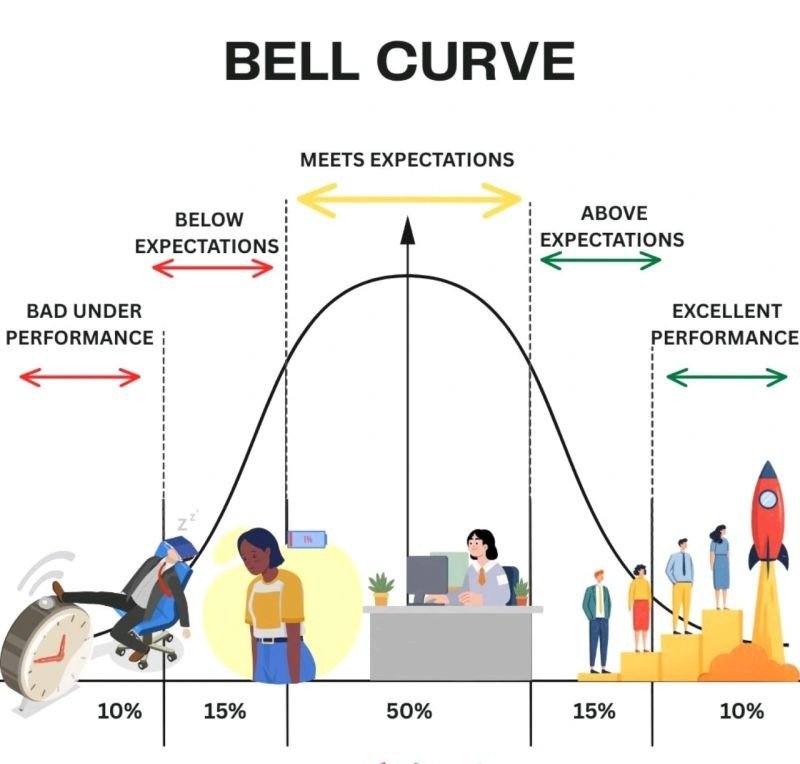
The word normal comes from the Latin word norma, meaning a carpenter’s square. For centuries, the word simply meant perpendicular. But in the 1830s, a Belgian statistician named Adolphe Quetelet realized that the law of errors, used in astronomy to average out measurement errors when observing stars, could also be applied to human beings. He measured height, weight, and other traits across large populations, plotted them, and found that most people clustered near the middle, with fewer at the extremes. From this, he proposed the idea of l’homme moyen, or the average man, creating normal as an ideal.
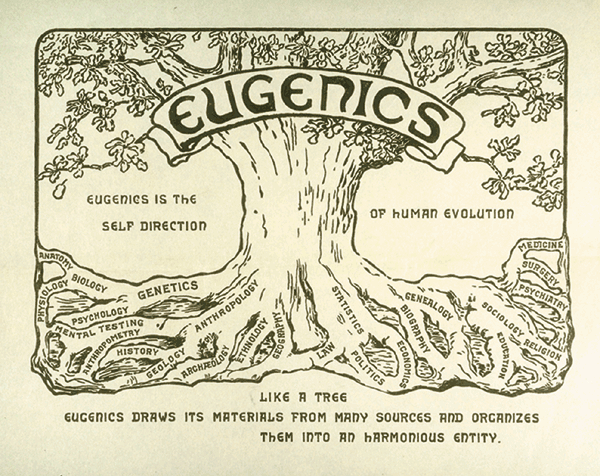
But that is not where the evolution of the word’s intent stopped. In an almost Frankensteinian manner, Francis Galton, Charles Darwin’s cousin and the founder of the Eugenics movement, took it further. Galton didn’t want to stop at the idea of an average man; rather, he wanted desirable extremes to be set as the goal for the entirety of the human race.
He renamed Quetelet’s error curve the normal distribution so that the desired extremes were no longer seen as errors, and he added a ranking system to a concept that was already exclusionary in nature. Galton reasoned that if human traits could be measured and ranked, then human populations could be deliberately improved by encouraging reproduction among the fit and discouraging it among the unfit.
How Deviation Became a F(law)
Galton’s ideas inspired Alexander Graham Bell (inventor of the telephone) to establish the philosophy of oralism in the late nineteenth century. Obsessed with eugenic ideas, Bell viewed Deaf culture, intermarriage, and sign language as threats to a healthy society and actively advocated to eradicate sign language in favor of coercing deaf children to speak and lip-read. Under his influence, schools for the deaf banned sign language, fired deaf teachers, and forced students into speech training. Bell’s policies were about assimilating non-conforming bodies into the dominant linguistic norm. For centuries, people with disabilities faced systematic marginalization. They were forced into asylums, sterilized, and denied access to public spaces and employment.
The ranking system also expanded into psychiatry, where institutions defined a cognitive norm to evaluate human minds, leading to the development of the Intelligence Quotient (IQ) test alongside other talent and achievement metrics. Thinking styles or emotional responses that strayed from this mental norm were categorized as disorders needing treatment. By framing neurodivergence as a failure to meet behavioral norms, society ensured that internal variation was treated with the same suspicion as physical deviation.

The Unbroken Legacy of the Norm
With this, what was once a statistical average became a natural ideal. From their earliest years, the logic of the norm in various fields, including psychology and biology, and the functioning of eugenics were the exact same project wearing two names. Everyone who fell on the lower half of the ranking was perceived as a deviation that needed to be corrected, hidden, or eliminated. That is why mental illness, sexual orientation, and bodily differences came to be seen as wrong, rather than simply as alternative ways of being human among many.
It would be comforting to believe that we have corrected history, and that normal is no longer a concept that alienates people who don’t fit the ideal. Unfortunately, that’s not how this story ends. The logic of the norm still organizes many parts of modern life, often even without the explicit statistics that gave it credibility in the first place.
Algorithmic Eugenics and Modern Life
We see this when people on the internet measure faces against the golden ratio to establish who is the most beautiful person of all. We see it when disabled bodies are denied access to public spaces or exercising marital rights, simply because institutions were set up without considering those who exist outside the norm. We see it when queer individuals are denied their basic rights to own property with their partners. And lastly, we see it in algorithms: recommendation systems, hiring software, and credit-scoring tools are all built on the same statistical logic that Quetelet pioneered: finding the pattern in the data, treating it as the baseline, and flagging whatever deviates from it.
When training data reflects existing social norms, the algorithm doesn’t just describe those norms; it enforces them, demonstrating how eugenic logic still operates in the 21st century to define an ideal human. None of this means that every use of normal or average is inherently oppressive. Averages can be genuinely useful in medicine, public policy, and understanding populations at scale. The problem is not measurement itself. The problem occurs when a statistical average gets treated as a moral ideal and when how most people are becomes how people should be.
— AKANKSHA GAUTAM
MUST READ: The Rise of Regional Literature: Giving Voice to India’s Diverse Narratives
