
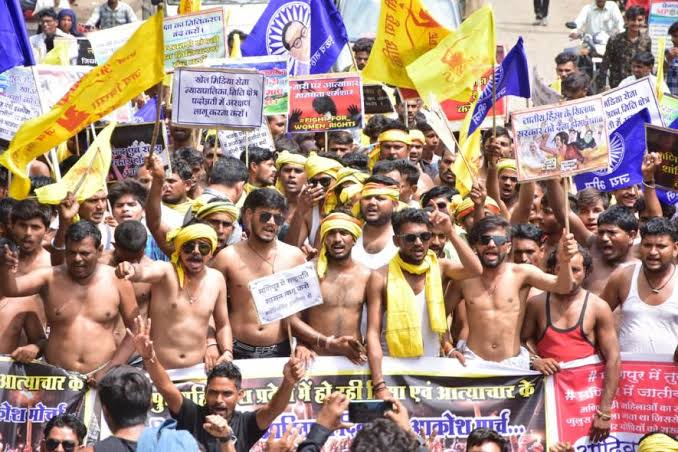
The MP tribal protest against the Ken–Betwa River Linking Project in Chhatarpur became one of the most emotionally charged struggles over land, displacement, and tribal rights in Madhya Pradesh. For affected families, the issue is not simply about compensation; it is about homes, forests, rivers, livelihoods, and an ancestral identity that cannot be replaced by money.
The agitation took place near the Barana River and involved tribal families, farmers, activists, and residents connected to villages affected by the Ken–Betwa project and other irrigation schemes. Protesters demanded transparent rehabilitation, fair compensation, and legal safeguards before their land and homes were taken away.
A Protest Born From Fear
The MP tribal protest grew from the fear of displacement. According to a rehabilitation proposal submitted by the National Water Development Agency, the first phase of the project could affect 1,913 families, including 648 Scheduled Tribe families. For these communities, displacement means losing far more than a house or a field.
The land represents generations of memory and survival. Forests provide food, fuel, and livelihoods, while rivers and agricultural fields shape the community’s daily life. That is why protesters have argued that a financial package alone cannot replace the social and cultural connection they share with their land.
Why Ken–Betwa Matters
The Ken–Betwa River Linking Project is presented by the government as a major solution to Bundelkhand’s water crisis. The project aims to transfer water from the Ken River basin in Madhya Pradesh to the Betwa basin in Uttar Pradesh, with proposed benefits including irrigation for more than 10 lakh hectares and drinking-water access for millions of people.
The project includes the Daudhan Dam and a canal system, with an estimated cost of ₹44,605 crore. Supporters say it could help drought-prone areas and strengthen agriculture, drinking-water supply, and power generation. However, affected residents believe development should not move forward without first protecting the rights and dignity of families who may be displaced.
Symbolic Resistance By Women
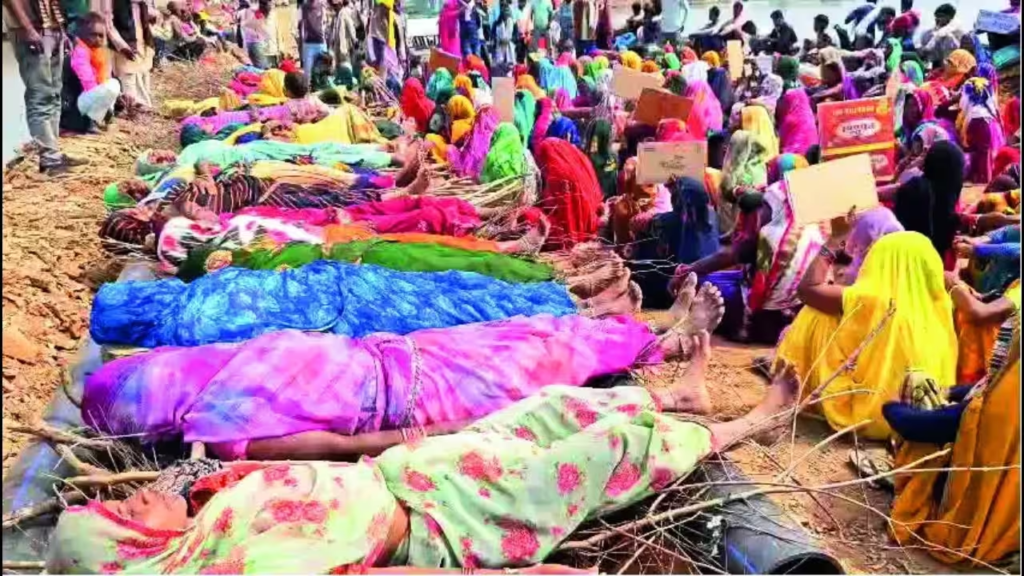
One of the most powerful features of the MP tribal protest was the participation of tribal women. Many women sat beside symbolic funeral pyres in what became known as Chita Satyagraha, conveying that losing their land would feel like losing their entire way of life.
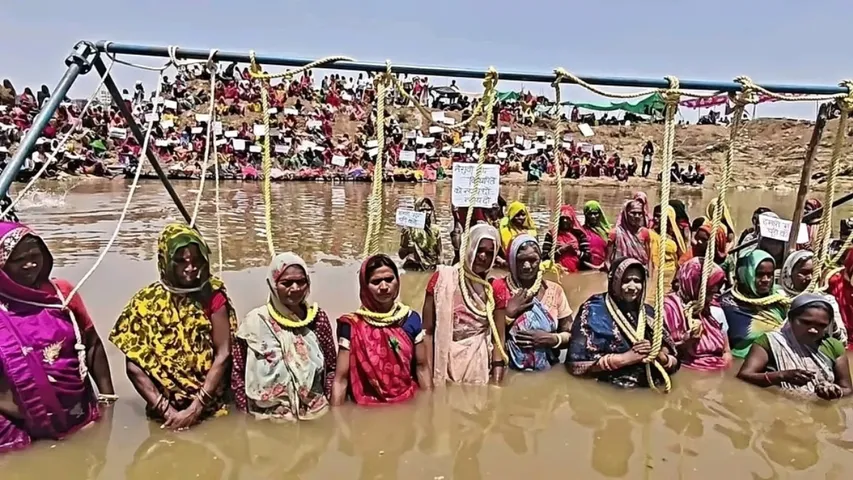
Other demonstrations included Jal Satyagraha, in which protesters stood in river water, and Phansi Satyagraha, which used symbolic nooses to express the seriousness of their distress. These were dramatic but non-violent forms of resistance designed to draw attention to the fear of forced displacement and inadequate rehabilitation.
Demands For Justice
The protesters’ demands were specific. They sought complete disclosure of the list of project-affected families, fair compensation under the Land Acquisition, Rehabilitation and Resettlement Act, 2013, and land-for-land rehabilitation options wherever possible.
They also raised concerns about families allegedly being left out of official surveys and about rehabilitation measures not being completed before displacement. Their demands extended beyond the Ken–Betwa project to include people affected by the Majhgaon and Runjh irrigation schemes.
Law, Land, and Accountability
The MP tribal protest also raised questions about the Forest Rights Act, 2006, and the role of local communities in decisions affecting forest land. Tribal families and activists alleged that legal safeguards were not adequately followed and that their objections were not properly addressed before project activities moved ahead.
The Union Ministry of Tribal Affairs said complaints concerning displacement had been forwarded to the Madhya Pradesh government and district authorities. It also indicated that responsibility for implementing rehabilitation and forest-rights provisions rested largely with the state administration. This has placed greater pressure on the Madhya Pradesh government to respond transparently and directly to affected families.
Protest Ends, Questions Remain
After more than two weeks of demonstrations, police cleared the protest site near Kupi village on July 19, 2026. Activist Amit Bhatnagar, who had been on an indefinite hunger strike, was reportedly removed during the police action, while protesters said their central concerns remained unresolved.
The end of the sit-in did not end the larger debate. The MP tribal protest has become a symbol of the difficult question facing India: how can major infrastructure projects deliver public benefits without treating displaced communities as obstacles?
For the families of Chhatarpur, the struggle is not only about the Ken–Betwa project. It is about whether development can respect consent, fair rehabilitation, environmental responsibility, and the right of tribal communities to live with dignity on their ancestral land.
-RITOBROTA BANERJEE
MUST READ: Jantar Mantar Protest: A Powerful Day of Hope and Hurting
