
We are a fashionable caste
Or tribe, you may call :
Our forefather Mayo Dhed
Had a shirt of 3 sleeves,
His father had a shroud as his shirt
And his father wore a shirt of his own skin.
I am no less fashionable –
Just got a pocketless, sleeveless, buttonless
Peter England, the second
From the pavements I sweep.
Every passerby is tempted to pay his respects
To the label of the lords
But without touching my collar-bone.
Our shirt has a song to sing.
Of bizarre fashions.
— Nirav Patel
In 2003, Wilson argued that fashion is inseparable from the experience of modernity itself; it reflects fluidity, novelty, and other characteristics of modern social life. Fashion is far from being a trivial aesthetic phenomenon; rather, it is a social institution through which class, gender, identity, and power are continuously negotiated. This article traces the sociological theories of fashion and grounds these in historical and contemporary Indian examples.
Classical Foundations: Simmel and the Dialectic of Fashion
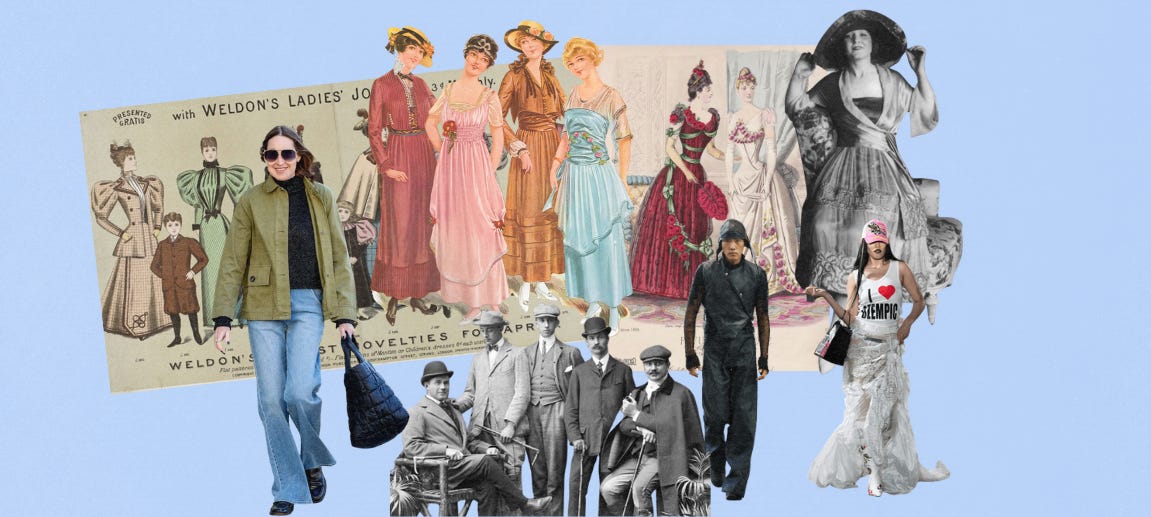
Georg Simmel (1904) describes fashion as a dual process of imitation and differentiation: individuals adopt fashion to feel connected to a social group, while simultaneously using fashion to distinguish themselves from other groups, particularly those of lower status. This trickle-down model suggests that once a style is imitated by the lower classes, the elite abandon it in favour of something new, resulting in a perpetual cycle of fashion.
This dialectic of imitation and distinction is vividly visible in Indian history. During the colonial period, Indian elites who worked closely with the British administration often adopted European fashion (suits, hats, and leather shoes) as a mark of social mobility and proximity to power. Meanwhile, the swadeshi movement, particularly after 1905, transformed fashion into an act of political differentiation: wearing hand-spun khadi became a deliberate rejection of British fashion and a marker of nationalist identity (Maynard, 2004). Gandhi’s adoption of the loincloth and khadi shawl was itself a fashion statement. It can be seen as a conscious act of differentiation from both colonial fashion and the fashion of Westernised Indian elites.
Veblen and the Pecuniary Culture of Dress
In The Theory of the Leisure Class, Veblen (2007) argues that dress signals wealth not through utility but through evident wastefulness. It is in the impracticality of fine fabrics, restrictive garments, or the labour-intensive elaborateness of ornamentation that one reflects their affluence; this concept is what Veblen called conspicuous consumption. Fashion, for Veblen, is a system of status display in which the leisure class demonstrates its exemption from productive labour through dress.
Veblen’s framework illuminates the historical role of the sari, particularly the elaborately woven Banarasi or Kanjeevaram silk sari, worn at weddings among wealthy Indian families. The impracticality of heavy zari work and the sheer cost of hand-woven silk function precisely as Veblen describes: conspicuous, non-utilitarian markers of status. In the contemporary period, this logic persists in the Indian bridal fashion industry, where couturiers such as Sabyasachi Mukherjee produce garments whose value lies substantially in their symbolic display of wealth rather than practical function, reproducing Veblen’s pecuniary culture within a thoroughly modern, globalised fashion economy.

Blumer’s Critique: Collective Selection
Herbert Blumer adds to the work of Simmel and Veblen by rejecting the assumption that fashion is driven simply by elite emulation. Blumer (1969) instead proposes a theory of “collective selection,” in which fashion change results from a broad process of taste formation across social groups responding jointly to the spirit of the times (zeitgeist), rather than from lower classes chasing oʻthe upper classes. Designers, according to Blumer, do not dictate fashion so much as anticipate and interpret emerging collective sensibilities.
Contemporary Indian fashion demonstrates Blumer’s collective selection well. The widespread adoption of the “Indo-Western” fusion aesthetic- kurtas paired with jeans, or Nehru jackets worn over Western shirts- did not originate from a single elite source trickling downward. Rather, it emerged simultaneously across urban middle classes, Bollywood costume design, and street-level tailoring, reflecting a collective negotiation of modern Indian identity rather than simple imitation of the wealthy. Blumer’s model helps explain why fashion in India today moves in multiple directions at once from designer runways to influencer culture to regional adaptations rather than along a single hierarchical axis.
Fashion as Language: Barthes and the Sign System
Roland Barthes approaches fashion semiologically, treating it as a system of signs analogous to language. Barthes (2013) argues that fashion communicates meaning through a structured vocabulary of garments, whereby specific combinations of cut, colour, and fabric are encoded with social significance, comprehensible to those versed in the fashion “language” of their time. Fashion magazines, in Barthes’s analysis, function as grammars that instruct readers in how to read and produce these sartorial meanings.
This semiotic reading of fashion is useful for understanding the coded meanings of Indian dress. The colour and drape of a sari can communicate regional identity, marital status, religious affiliation, or occasion, with a white sari signifying widowhood in many communities and a red sari signifying marital auspiciousness in North Indian weddings.
A plastic bag on the run reflects wealth and affluence; the same bag seen in local asian markets is a common tool of utility that would never be seen as high fashion. Contemporary Indian fashion media, from Vogue India to Instagram fashion pages, teaches audiences to decode the semiotics of fashion and elaborates on combinations of traditional and Western garments as markers of a particular urban modern Indian identity.
Material Culture, Commodity, and Consumption
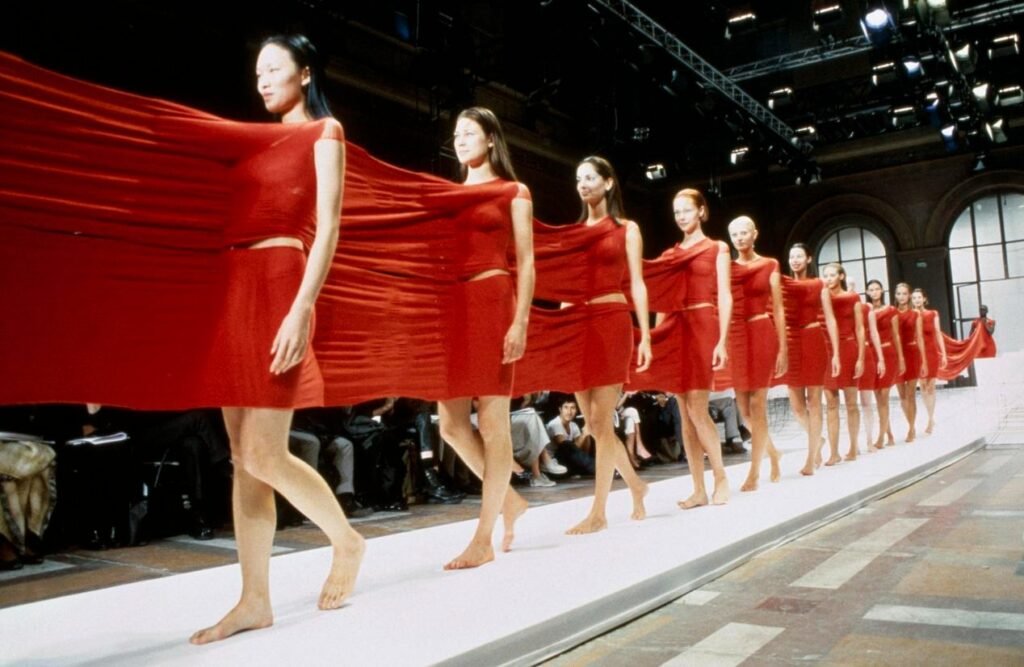
The sociology of fashion also attends closely to the material and economic dimensions of dress. Bovone (2006) argues for treating fashion through the lens of material culture, emphasising that garments are not merely symbolic but are objects embedded in networks of production, exchange, and use. Barnard (2014) similarly stresses that fashion cannot be separated from its position within systems of production and consumption; fashion is manufactured, marketed, and consumed within capitalist economic structures that shape what becomes fashionable and for whom.
Fletcher’s (2007) work on sustainable fashion adds a critical dimension, arguing that the globalised fashion industry’s emphasis on rapid turnover generates high environmental and social costs, and calling for localised, light approaches to textile production. This concern resonates strongly in the Indian context, where the handloom and khadi sectors, historically central to the swadeshi movement, have been revived in recent decades as a sustainable counterpoint to fast fashion. Contemporary Indian designers and brands increasingly market handloom fashion as an ethical alternative to mass-produced garments from multinational fast-fashion retailers such as Zara and H&M, which have expanded rapidly into urban Indian markets.
Identity, Class, and Social Change
Fashion is also a primary vehicle for the negotiation of identity and social change. Crane (2012) argues that fashion functions as a field in which class, gender, and identity are continuously constructed and contested, with clothing choices signalling and sometimes challenging existing social categories. Davis (1994) extends this by framing fashion as closely tied to identity ambivalence, where individuals use dress to manage competing social identities amid rapid cultural change.
Indian social history offers a striking parallel in the politics of dress and caste. B. R. Ambedkar’s insistence that Dalit communities adopt the practices of dress, including footwear and well-tailored clothing historically denied to them under caste restrictions, illustrates fashion‘s role as a tool of social assertion and resistance, much as McRobbie describes marginalised groups reworking fashion to claim dignity and identity. In the contemporary period, this politics of dress continues: the rise of India’s homegrown streetwear and denim labels among urban youth, and the visibility of gender-nonconforming fashion on social media.
Conclusion
Across Simmel’s dialectic of imitation and differentiation, Veblen’s pecuniary culture, Blumer’s collective selection, Barthes’s semiotics, and Wilson’s account of modernity, fashion emerges consistently as a deeply social phenomenon, structured by class, economy, and identity rather than by aesthetics alone. The Indian case — from the swadeshi rejection of colonial fashion to the contemporary coexistence of global fast fashion and revived handloom traditions — demonstrates that fashion is never simply about clothes. It is a continuously negotiated field in which history, politics, and economy converge, making fashion an indispensable object of sociological analysis both historically and in the globalized present.
— Akanksha Gautam
