

Have I Been Here Before?
Picture this: You walk into a room full of people laughing, talking, and playing together. You’ve never been there before, yet every detail feels strangely familiar—as if you’ve lived that exact moment already.
This peculiar experience is called déjà vu, a phenomenon that has fascinated psychologists, neuroscientists, and philosophers for centuries. Is it simply a trick of the brain, or is there something more mysterious behind it?
What Is Déjà Vu?
It is the strange feeling that you have already experienced a moment that is actually happening for the very first time. It creates the uncanny sensation that the present has somehow become a memory.
The term “déjà vu” comes from French and literally means “seen before.” Although the feeling can be unsettling, it is surprisingly common and is usually harmless.
How Common Is It?
Studies suggest that around two-thirds of people experience déjà vu at least once in their lifetime. It is most common during adolescence and early adulthood, becoming less frequent with age.
For many, the experience lasts only a few seconds but leaves them wondering how something entirely new could feel so familiar.
What Happens Inside the Brain?
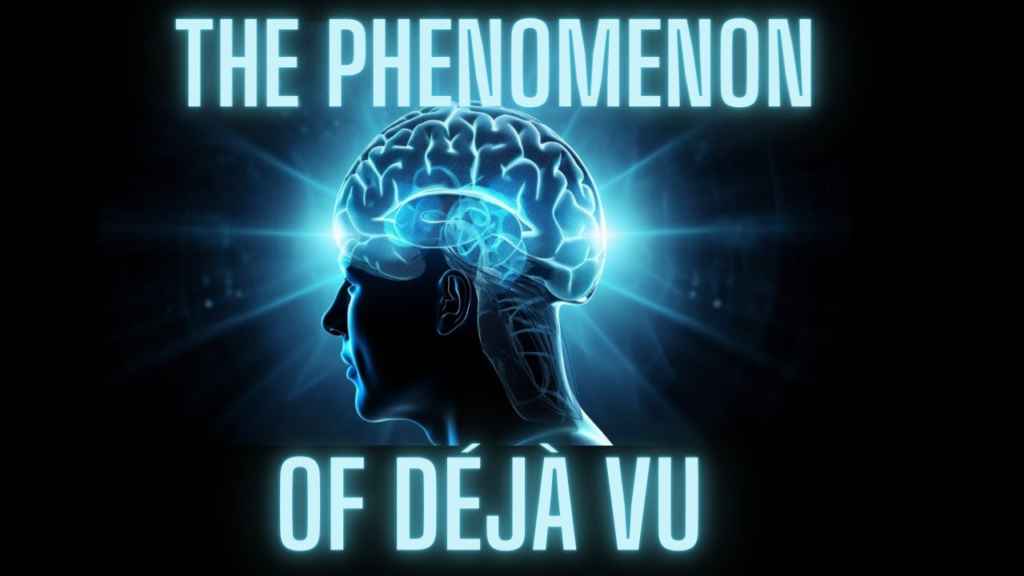
Scientists believe that the medial temporal lobe, a region involved in memory and familiarity, plays a major role in this phenomenon. This part of the brain helps us recognize places, people, and experiences by comparing new information with stored memories.
Déjà vu may occur when this memory system briefly falls out of sync. As a result, the brain mistakenly labels a new experience as something familiar, creating a false sense of recognition.
Can Stress and Fatigue Trigger Déjà Vu?
One scientific theory suggests that stress and fatigue can increase the likelihood of experiencing déjà vu.
When the brain is tired or under stress, its neuronal networks may not communicate as efficiently. These temporary misfires can disrupt normal memory processing, making a completely new situation feel oddly familiar.
Researchers have also found that, in some cases, this frequent feeling may be associated with certain neurological conditions. However, for the vast majority of people, it is considered a normal and harmless experience.
Déjà Vu and Delusions: Are They the Same?
Although they may seem similar, déjà vu and delusions are very different.
A delusion is a fixed belief that persists even when there is clear evidence proving it wrong. Déjà vu, on the other hand, is only a temporary feeling of familiarity. People experiencing the same usually recognize that the sensation is unusual and know that the moment is actually new.
In other words, it briefly influences perception, whereas a delusion affects belief.
Other Theories Behind Déjà Vu
Not every explanation is purely neurological.
Some people believe that déjà vu is evidence of memories from a past life. While this idea remains popular in spiritual discussions, there is no scientific evidence to support it.
Another theory links déjà vu to false memories—memories that feel real but never actually happened. This is similar to the confusion people sometimes experience when they cannot distinguish between a dream and a real event. Although this theory has been widely discussed, many researchers now believe that this feeling cannot be explained by false memories alone.
A Puzzle Scientists Are Still Solving
Modern research suggests that déjà vu results from a complex interaction between several brain systems responsible for memory, familiarity, conflict detection, and spatial processing. Whether it is triggered by similar surroundings, temporary neural misfiring caused by fatigue, or the brain’s intricate memory networks, this continues to be one of neuroscience’s greatest mysteries.
Interestingly, some researchers believe that experiencing occasional déjà vu may actually be a sign of a healthy, well-functioning brain—one that constantly checks memories for accuracy and detects inconsistencies before false memories are formed.
Conclusion
The next time you experience that strange feeling of having lived a moment before, remember that your brain is performing one of its most fascinating tricks. While science has uncovered many clues about déjà vu, it has not yet solved the mystery completely.
Perhaps that’s what makes déjà vu so captivating. It reminds us that, despite all our scientific progress, the human brain still holds countless secrets waiting to be discovered.
– Charvi Jain
MUST READ: FIFA World Cup: The Ultimate Power Tournament That Defines Global Football Glory
