
IMPACT OF SPACE EXPLORATION ON KIDS’ EDUCATION
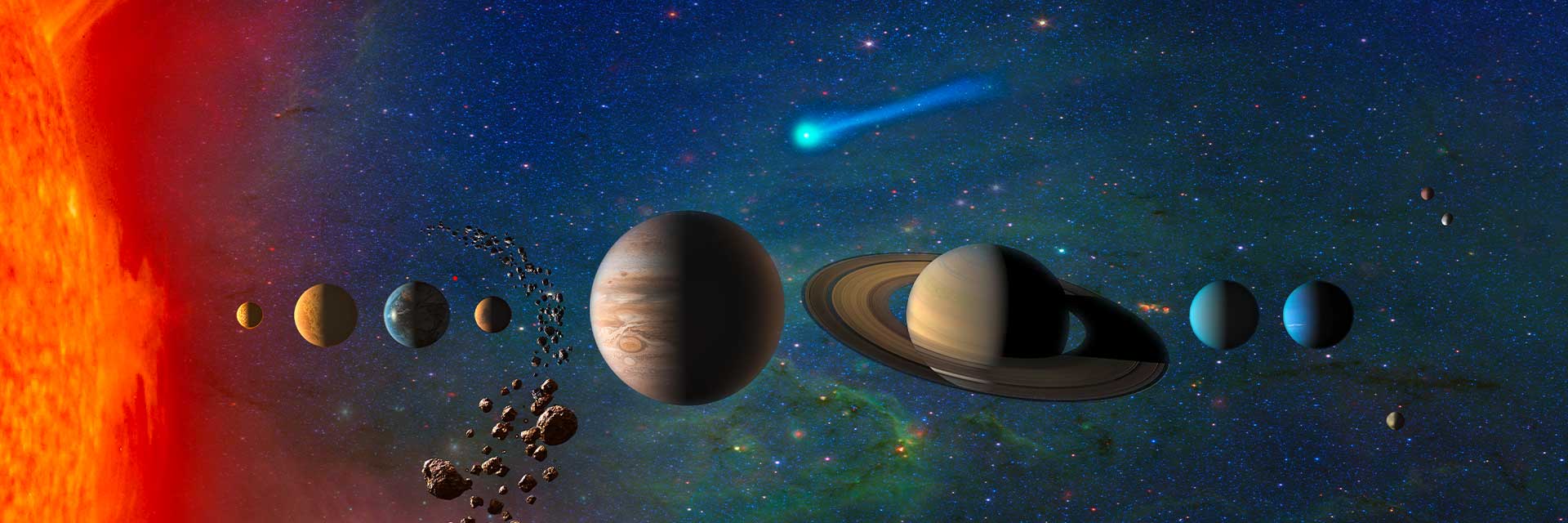
Space has always fascinated me, but it became real when our classes started using actual missions and telescope images to teach science and math. Suddenly, formulas read like flight plans and questions felt like countdowns. Now space isn’t just “out there”—it’s a lens that helps students like me, including those in under-resourced schools, learn in ways that are exciting, rigorous, and empowering.
Beyond the Stars and into the Classroom
Space isn’t just for astronauts and scientists—it’s for all of us. When classrooms invite the cosmos inside, school stops feeling like a routine and starts to feel like an expedition. Space themes turn abstract ideas into vivid experiences, give purpose to tough subjects, and help students see themselves as problem-solvers with a role to play in humanity’s next big chapter.
Inspiring Curiosity and Imagination
Space is a spark. Distant galaxies, black holes, icy moons, and human footsteps on dusty worlds all tug at children’s imaginations. The moment a student asks, “What’s on the far side of the Moon?” or “Could we live on Mars?” they’ve already stepped into scientific thinking: asking testable questions, seeking evidence, and revising ideas.
In classrooms, this curiosity is sparking. A short clip of a rover landing or a photo from the James Webb Space Telescope can transform a quiet room into a buzzing lab of “what ifs.” Students who might tune out during a standard lecture often light up when the context is a mission, an astronaut’s diary, or a mystery about a strange exoplanet. That shift matters. When learning feels like adventure, attention lasts longer, persistence rises, and kids discover that big questions aren’t scary—they’re invitations.
To be honest, curiosity isn’t limited to science. Space is an inspiration for creative writing, art, and debate as well. A poem about the night sky, a comic about a starship crew, or a class discussion about the ethics of colonizing other worlds shows students that imagination and inquiry can coexist, each strengthening the other.
Strengthening STEM Education
Space is where STEM comes alive. Newton’s laws stop being formulas and become the language of rockets. Fractions and ratios turn into fuel mixtures, trajectory calculations, and life-support budgets. Even students skeptical of math tend to lean in when the numbers mean landing safely or keeping a crew alive.
Teachers can build steady ramps from curiosity to competence. A week-long unit might start with a story about a mission, then shift into hands-on labs that model gravity or simulate orbital motion with string and weights. Coding challenges—like guiding a “rover” robot through a taped-off crater field—give immediate, joyful feedback. The outcome is twofold: students see relevance, and they build skills by doing, not just by listening.
Many schools layer in extracurriculars: space clubs, telescope nights, or design-build competitions. These programs anchor abstract learning to shared goals and deadlines. Over time, kids who get hooked on space begin to picture themselves as the people who design the next instrument, debug the next navigation algorithm, or lead the next mission review. That identity shift is powerful. “I’m just not a math person” becomes “I need this math to make my rocket fly.”
Encouraging Problem-Solving and Critical Thinking
Every space mission is a case study in persistence. Antennas fail. Dust storms roll in. Software glitches at the worst moment. Mission teams respond by diagnosing, testing, iterating, and trying again—habits that are the heartbeat of critical thinking.
In school, space-framed projects teach these habits explicitly. Students might prototype a lander with limited materials, test it from a fixed height, review what went wrong, then modify and retest. They learn to separate the problem from the person: a failed design isn’t a failed student; it’s an experiment with new data. Reflection journals can capture this growth: What did we assume? What surprised us? What evidence changed our minds?
Even brief exercises reinforce rigorous thinking. Analyzing a photo of a cratered surface becomes a lesson in observation versus inference. Planning a mock mission budget introduces trade-offs and constraints. Debating whether to launch now or delay for better conditions spotlights decision-making under uncertainty. These experiences build mental muscles students can use anywhere—whether in science, sports, the arts, or life.
Promoting Global Awareness and Teamwork
No one goes to space alone. The International Space Station, multinational telescopes, and international launch partnerships show kids that collaboration across languages, cultures, and time zones is normal—and necessary—when goals are ambitious.
Group projects mirror that reality. Teams adopt roles—systems engineer, payload specialist, communications lead—and practice handoffs, documentation, and respectful disagreement. The lesson is practical: the mission succeeds when the team succeeds. It’s also civic and global: the biggest problems on Earth (climate, health, equity) resemble space challenges in their scale and complexity, and they’ll require the same spirit of shared purpose.
Learning about global achievements in space broadens students’ maps of excellence. Seeing engineers, scientists, and astronauts from many countries—and many backgrounds—helps kids imagine futures that include them. When a classroom celebrates discoveries made in Nairobi, Tokyo, São Paulo, or Prague, students internalize a core truth: human curiosity is universal, and progress is a team sport.
Integrating Technology and Innovation
Space exploration is a laboratory for useful inventions. Technologies first designed for missions—lightweight materials, satellite navigation, advanced imaging, water recycling—often end up serving people on Earth. Connecting those dots helps students understand innovation as a cycle: identify a tough problem, develop a solution, and then adapt it to new contexts.
In class, technology becomes a toolkit rather than a distraction. Coding can model gravity or process telescope data. Robotics can mimic rover mobility and sensor fusion. Data analysis can compare star brightness over time or map climate patterns from satellite imagery. When students see their code “drive” a simulated rover or their algorithm detect patterns in noisy data, abstract skills gain real purpose.
A few well-chosen activities can make the connection tangible:
- Program a microcontroller to regulate “space habitat” temperature in a shoebox greenhouse.
- Use image processing to identify craters in lunar photos and estimate their sizes.
- Build a low-cost spectroscope to analyze light sources and discuss what spectra reveal about stars.
These projects teach students to think like innovators: define requirements, prototype, verify, and improve.
Fostering Emotional Growth and Aspiration
Space stories aren’t only technical; they’re profoundly human. Training for months to endure launch; troubleshooting calmly while alarms blare; trusting a team that’s a world away—these narratives model courage, humility, and perseverance.
When students read an astronaut’s account of fear giving way to focus, they gain language for their own challenges: a hard exam, a performance, a tryout. Reflective writing prompts—“What’s your launch moment this month?”—help kids translate inspiration into action. They learn that grit isn’t about never failing; it’s about refining effort in the face of failure.
Aspirations flourish in this soil. A child might not want to be an astronaut, but the qualities that space celebrates—discipline, curiosity, teamwork, service—apply to countless futures: nurse, architect, teacher, climate scientist, artist-engineer. Space shows that “dream big” isn’t a cliché; it’s a practice supported by daily habits and community.
Building Future Explorers
Ultimately, space-centered education is less about producing rocket scientists and more about cultivating explorers—people who notice, question, test, and care. When a classroom treats the universe as a shared project, students develop confidence that their ideas matter and their effort can move real problems.
The pathway forward is accessible. Libraries stock astronomy books and mission biographies. Free software can model orbits, visualize planets, and analyze images. Community groups host star parties and rocketry days. Schools can embed small, recurring experiences rather than waiting for big, rare events: a weekly “night sky update,” a monthly data challenge, a quarterly design sprint.
Students who follow these threads build a toolkit for life:
- Curious to ask better questions.
- Competence to do the math, write the code, or build the prototype.
- Character to persist, collaborate, and lead with empathy.
And yes—some will become the scientists, engineers, and mission specialists who answer the next generation’s questions. But all will be better prepared citizens and creators, ready to shape a future that is both ambitious and humane.
Conclusion: Launching Beyond the Classroom
Space exploration belongs in the classroom, not as decoration but as a framework for meaningful learning. It inspires curiosity and imagination, strengthens STEM, builds resilient problem-solvers, nurtures teamwork across borders, integrates real technology and innovation, fosters emotional growth and purpose, and—most importantly—builds future explorers. The universe is waiting, but the journey begins here: with a question, a team, and the courage to take the next small step.
– AMEYA BHARDWAJ
MUST READ: THE NEW BEGINNING: THE LASTING TOLL OF COVID-19 ON KIDS AND THEIR FUTURE
