
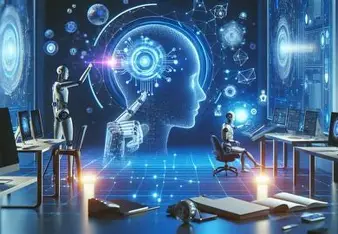
Have you ever searched for something online and then suddenly started seeing advertisements, videos, or recommendations about the exact same thing which you were looking for? Or opened YouTube or Instagram for “just five minutes” and ended up watching content that somehow matches your interests perfectly? It can almost feel as if technology is reading our minds. But it is not magic. Technology has simply become very good at observing us.
Every day, we leave behind tiny pieces of information without even noticing. The videos we watch, the posts we like, the things we search for, the songs we repeat, and even the content we skip tell algorithms something about us. Individually, these actions may seem insignificant, but when they are put together, they can create a surprisingly detailed picture of who we are.
We Tell Technology More Than We Realise
Think about an ordinary day. You wake up and check your phone, listen to music while getting ready, watch a few videos during a break, search for something you are curious about, and scroll through social media before going to bed. None of these actions feels important enough to remember, but technology remembers them. It notices patterns in our behaviour that we often ignore ourselves.
The interesting part is that technology does not necessarily learn what we say we like. It learns from what we actually do. We might say that we are not interested in a particular topic, but if we repeatedly stop scrolling whenever something related to it appears, the algorithm may reach a very different conclusion. Sometimes, our digital behaviour can reveal habits and interests that we have never consciously thought about.
The Algorithm Knows Your Habits
We often feel that we are completely in control of what appears on our screens. We choose which app to open, which video to watch, and which post to click. But before we make those choices, algorithms have already decided what we are most likely to see. They select recommendations based on what we have done before and constantly adjust them according to our reactions.
If we watch one type of video until the end, the algorithm learns that we probably find it interesting. If we immediately skip another, it learns that too. After thousands of such decisions, the recommendations can become surprisingly accurate. That is why we sometimes see something and think, “How did it know I would like this?” It did not actually know. It simply studied us well enough to make a very good prediction.
From Knowing Us to Influencing Us
There is an important difference between knowing what someone likes and influencing what they choose. If an algorithm repeatedly shows us a certain type of content because it knows we are likely to watch it, our attention naturally begins moving in that direction. We may feel that we are freely choosing what to consume, while the options being placed in front of us have already been carefully selected.
This does not mean that technology controls us or that we have no choice. We are still capable of questioning what we see and making our own decisions. However, our digital surroundings can influence us without us noticing. Sometimes, the strongest influence is not the one that forces us to do something, but the one that quietly makes one choice easier and more attractive than another.
The Privacy We Give Away
The bigger question is perhaps how much information we are willing to give away in exchange for convenience. We often click “Allow” without thinking twice, accept terms and conditions without reading them, and give applications access to information simply because we want to use their features. Since we cannot physically see this information being collected, it rarely feels like we are giving away something valuable.
Imagine someone following us around all day and recording everything we did—what we looked at, where we went, what caught our attention, and what we ignored. Most of us would probably find that uncomfortable. Yet something similar can happen in the digital world, except it happens so quietly that we barely notice. Our online activity can reveal a great deal about us without us ever intentionally sitting down and telling anyone.
But Is Technology Really the Villain?
It would be unfair to treat technology as the villain in this story. The ability of technology to understand our behaviour can also be extremely useful. An educational platform can identify the topics a student struggles with and recommend suitable material. A music application can introduce us to songs we genuinely enjoy. A navigation app can learn our usual routes and help us save time.
The real problem is not that technology learns from us. The problem begins when we stop asking what it is learning, why it is learning it, and how that information is being used. Technology can make life easier, but convenience should not come at the cost of completely losing control over our personal information or our ability to make independent choices.
We Still Know Ourselves Best
An algorithm may know which videos will probably keep us watching, which products we might click on, or what kind of content we are likely to enjoy. It might even notice patterns in our behaviour before we consciously recognise them ourselves. In that sense, technology can sometimes appear to know us better than we know ourselves.
But there is one thing technology struggles to predict completely: change. People are not fixed patterns. We change our minds, discover new interests, lose interest in old ones, and sometimes make completely unexpected choices. An algorithm can study our past and make predictions about our future, but it cannot completely decide who we are going to become.
Technology may know our habits. It may understand our preferences. It may even predict some of our choices. But knowing our patterns is not the same as knowing us. And perhaps that small difference is what reminds us that, no matter how intelligent technology becomes, there will always be a part of being human that cannot be reduced to data.
– Charvi Jain
MUST READ: Screen‑Free Summer: A Powerful Real‑World Break for Kids in 2026
