
What the Protests Are Really About: Beyond a Single Incident
If you’ve heard something is happening in Iran but don’t know what it is, here’s a simple, clear explanation of the situation on the ground right now. The Iranian protests drew international attention as citizens gathered to demand political and social reforms.
At their surface, the protests in Iran are mass demonstrations by ordinary people against their government. These protests started in late 2025 and have continued into 2026, spreading across many cities and regions of the country. People from different walks of life—shopkeepers, students, workers, and families—have taken to the streets. Images from the Iranian protests spread rapidly on social media despite internet restrictions.
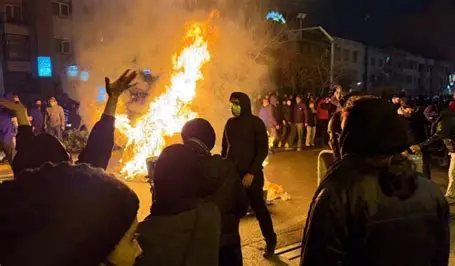
For many Iranians, the protests reflect accumulated frustration with a system that regulates morality, restricts political participation, and limits social expression. The state’s presence is felt in private spaces—homes, universities, clothing choices, and online activity. Over time, this constant oversight has created a sense of suffocation, especially among younger generations who have grown up with global exposure but limited domestic freedom. The Iranian protests became a significant moment in discussions about civil rights in the region.
Women at the Center, but Not Alone
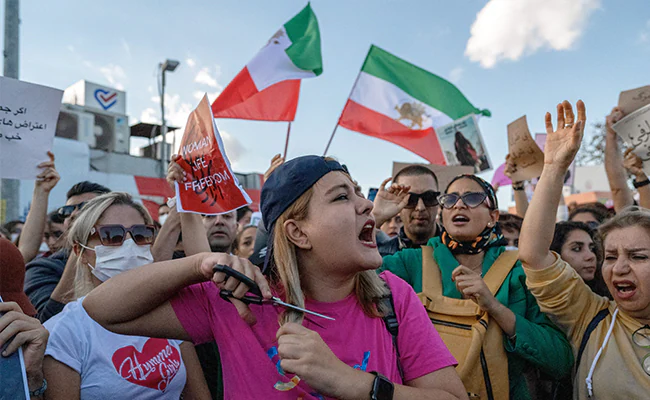
International media often frames the Iranian protests as “women-led,” and while women are undeniably at the forefront, this description is incomplete. Women removing hijabs, cutting their hair, and chanting slogans are powerful symbols, but they are supported by students, workers, ethnic minorities, and even some religious families.
Young men have been equally present on the streets, confronting security forces and facing severe consequences. University campuses have become hubs of resistance, with students openly challenging authorities. This shows that the protests are not just about women’s rights but about a generation rejecting enforced obedience. Women are the face of the movement, but the body behind it is much larger.
Economic Stress and Sanctions: The Silent Pressure
Beyond social restrictions, Iran’s economy plays a major role in sustaining public anger. Years of international sanctions, mismanagement, inflation, and unemployment have made everyday life difficult. Basic necessities have become expensive, wages are stagnant, and opportunities are shrinking—especially for educated youth. Many analysts have noted that the Iranian protests reflected long-standing economic pressures and public dissatisfaction.
Many protesters openly link political repression with economic failure. The argument on the streets is simple: a government that controls personal freedoms also fails to provide economic security. While sanctions imposed by the West are often blamed by Iranian authorities, protesters increasingly point toward corruption, elite privilege, and lack of accountability within the system itself.
The State’s Response: Control Over Dialogue
The Iranian state has largely responded with force rather than reform. Security agencies, including the Revolutionary Guard, have played a central role in suppressing protests. Internet restrictions are frequently used to limit organization and global visibility. Arrests of activists, journalists, and even lawyers have created a climate of fear. During the Iranian protests, authorities increased security presence in major urban areas.
Public executions and harsh sentences send a clear message: dissent will not be tolerated. However, this strategy has a paradoxical effect. While it temporarily suppresses protests, it deepens resentment and delegitimizes the state further. Instead of dialogue, the state relies on coercion, which only postpones conflict rather than resolving it. The Iranian protests have highlighted generational differences in expectations about governance and freedoms.
The Role of Identity: Youth, Culture, and a Changing Society
Iran today has a young population that is globally connected through culture, even if the internet is restricted. The Iranian protests were marked by participation from students, workers, and women across multiple cities. Music, films, and social media trends cross borders faster than censorship can stop them. This creates a clash between an ideologically rigid state and a society that is evolving socially and culturally.
For many young Iranians, the protest is not ideological in a traditional sense. They are not necessarily demanding regime change in structured political terms. Instead, they are rejecting a way of life imposed on them. This makes the movement difficult to contain because it is rooted in everyday experiences rather than formal political organizations.
International Reactions and Their Limits
Global reactions to Iran’s protests have been loud but limited. Western governments issue condemnations, impose sanctions, and express solidarity, but direct influence remains minimal. Iran’s leadership often uses foreign criticism to claim that protests are externally driven, even though their origins are domestic. News coverage of the Iranian protests varied widely across international media outlets.
At the same time, international attention matters to protesters. Global visibility offers some protection and keeps pressure on the state. However, there is also frustration inside Iran that international actors focus more on symbolism than on meaningful engagement with Iranian civil society. Human rights organizations closely monitored the Iranian protests and reported concerns about arrests.
-Bhawna
MUST READ: Explosive Protests: Iran’s Crisis
