
What a “Helicopter Child” Actually Is
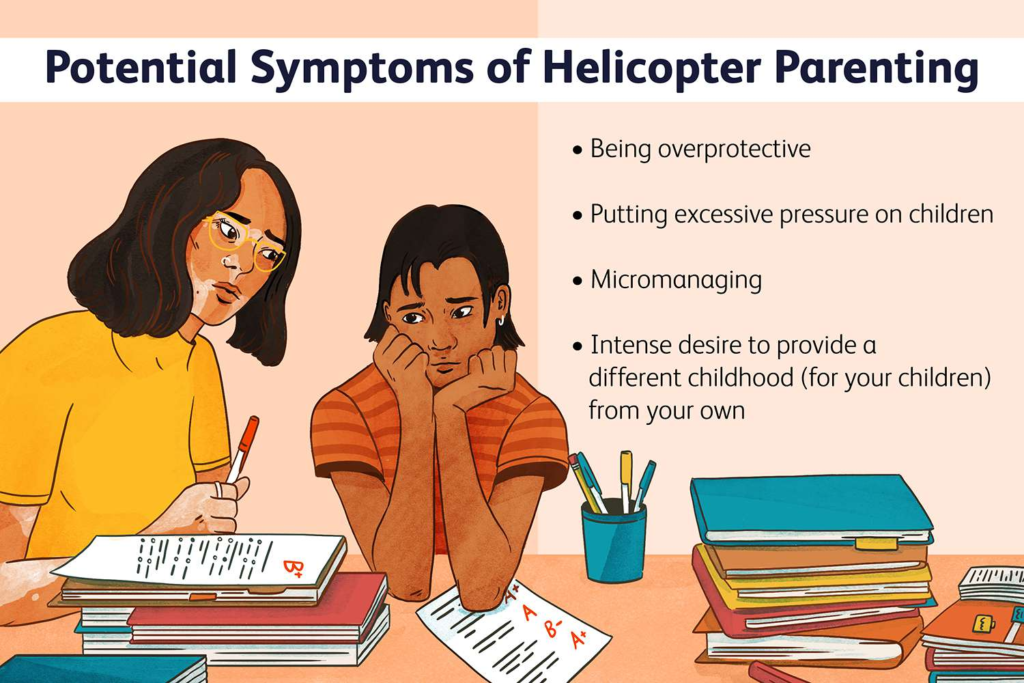
A helicopter child is not a child who hovers over others; it is a child who is constantly hovered over by parents, caregivers, and sometimes teachers. The term “helicopter parent” was coined decades ago, but in 2026 India, the helicopter child is now a common reality: a child whose day is planned from morning to night, whose friendships are curated, whose conflicts are resolved by adults, and whose risks are minimized to the point of being almost nonexistent.
For this helicopter child, the world is safe but small. They may have access to the best schools, the most expensive toys, and the most advanced learning apps, but they often lack the simple, unstructured freedom that earlier generations took for granted: running in a vacant plot, wandering to a nearby friend’s house, arguing over rules of a street game, and figuring out how to handle disagreements without adult intervention. The helicopter child grows up in a bubble of high care but low autonomy, where every decision is filtered through adult approval.
How Over‑Parenting Creates the Helicopter Child
Over‑parenting thrives in an environment of fear: fear of traffic accidents, fear of child abduction, fear of bad company, fear of falling behind academically, and fear of social media harm. Parents, especially in middle‑class and upper‑class families, respond by tightening control: no play outside without a parent nearby, no phone without monitoring apps, no friendships without parental vetting. Step by step, this creates a helicopter child whose life is managed rather than lived.
The helicopter child is also shaped by academic pressure. In a system where every small test is seen as a life‑or‑death gateway to a “good college,” parents feel compelled to fill every spare hour with coaching, worksheets, and extra classes. Play becomes a luxury, boredom becomes a sin, and unstructured time becomes suspicious. The helicopter child becomes a highly scheduled, high‑performing, but internally anxious individual who equates self‑worth with constant achievement and adult approval.
The Loss of Free Play and Its Hidden Costs
Free play—unstructured, child‑led, often messy play without adult direction—is one of the most powerful tools for developing resilience, creativity, social skills, and emotional regulation. For a helicopter child, however, free play is often replaced by “structured play”: organized sports, coached dance classes, scheduled music lessons, and pre‑planned playdates. These activities are valuable, but they are not the same as free play. They follow adult rules, adult goals, and adult timelines.
The consequences for the helicopter child are subtle but serious. Without the freedom to decide what to play, how long to play, and with whom, children lose practice in negotiation, conflict resolution, and risk‑taking. They may become more anxious when faced with uncertainty, less able to cope with rejection, and more dependent on adults to solve problems. The helicopter child may excel in exams but struggle in real-world situations that require improvisation, independence, and the ability to handle failure without immediate adult rescue.
Mental Health, Anxiety, and the Helicopter Child
The mental-health impact on the helicopter child is increasingly visible in schools, clinics, and family conversations. Many such children show signs of chronic anxiety, perfectionism, and fear of making mistakes. When every small error is corrected, every small risk prevented, and every small disappointment smoothed over by adults, the child never learns that failure is survivable. Instead, they internalize a belief that any mistake is catastrophic and that they are not capable of handling life on their own.
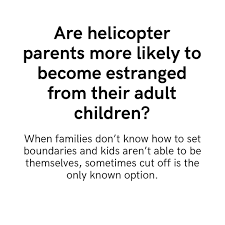
This dynamic is especially harmful during adolescence, when the natural developmental task is to become more independent. For the helicopter child, this transition is often blocked or delayed. Parents, fearing failure or moral decay, may extend control well into late teens and early adulthood, making it harder for the child to build a separate identity. The helicopter child may then experience intense stress when finally forced to make their own choices, leading to crashes, burnout, or complete withdrawal from decision-making.
Schools, Communities, and the Space to Reclaim Childhood
The fix for the helicopter child is not to blame parents but to share the responsibility of childhood across schools, communities, and policy. Schools can create safe, unstructured play zones where children are allowed to run, climb, argue, and explore without constant adult intervention. Communities can revive neighborhood play spaces, local parks, and peer groups where children can meet without heavy surveillance. Policy can support play‑based learning in early childhood and protect time for free play in the curriculum.
Parents, too, can gradually step back, allowing children to walk to a friend’s house, play in a park with peers, and handle minor conflicts on their own. This does not mean abandoning the child but moving from a “helicopter parent” to a “guide parent” who is present but not intrusive. For the helicopter child, this shift can be transformative: suddenly, they are allowed to be bored, to take small risks, to make small mistakes, and to learn from them.
Rebuilding Autonomy for the Helicopter Child
The long-term goal is to turn the helicopter child into an autonomous, confident, and resilient young person who can face uncertainty with curiosity rather than fear. This means redefining success not as constant achievement but as the ability to think, decide, and act independently. It means accepting that some risks are necessary, that some conflicts are normal, and that some failures are learning opportunities.
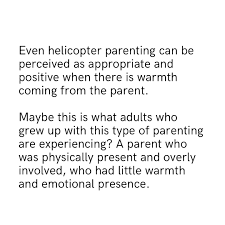
For families, schools, and communities, protecting the childhood of the helicopter child is not about removing all pressure but about restoring balance between structure and freedom, between safety and risk, and between adult guidance and child‑led exploration. The helicopter child does not need fewer caring adults; they need caring adults who are willing to let go a little, to trust the process of growing up, and to give children the space to become themselves.
-RITOBROTA BANERJEE
MUST READ: China Border Tensions Escalate: LAC Standoff 2026 and the Crucial Role of Local Guards
