
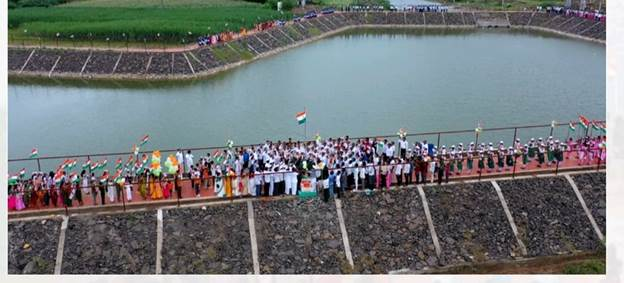
What Mission Amrit Sarovar 2026 Actually Is
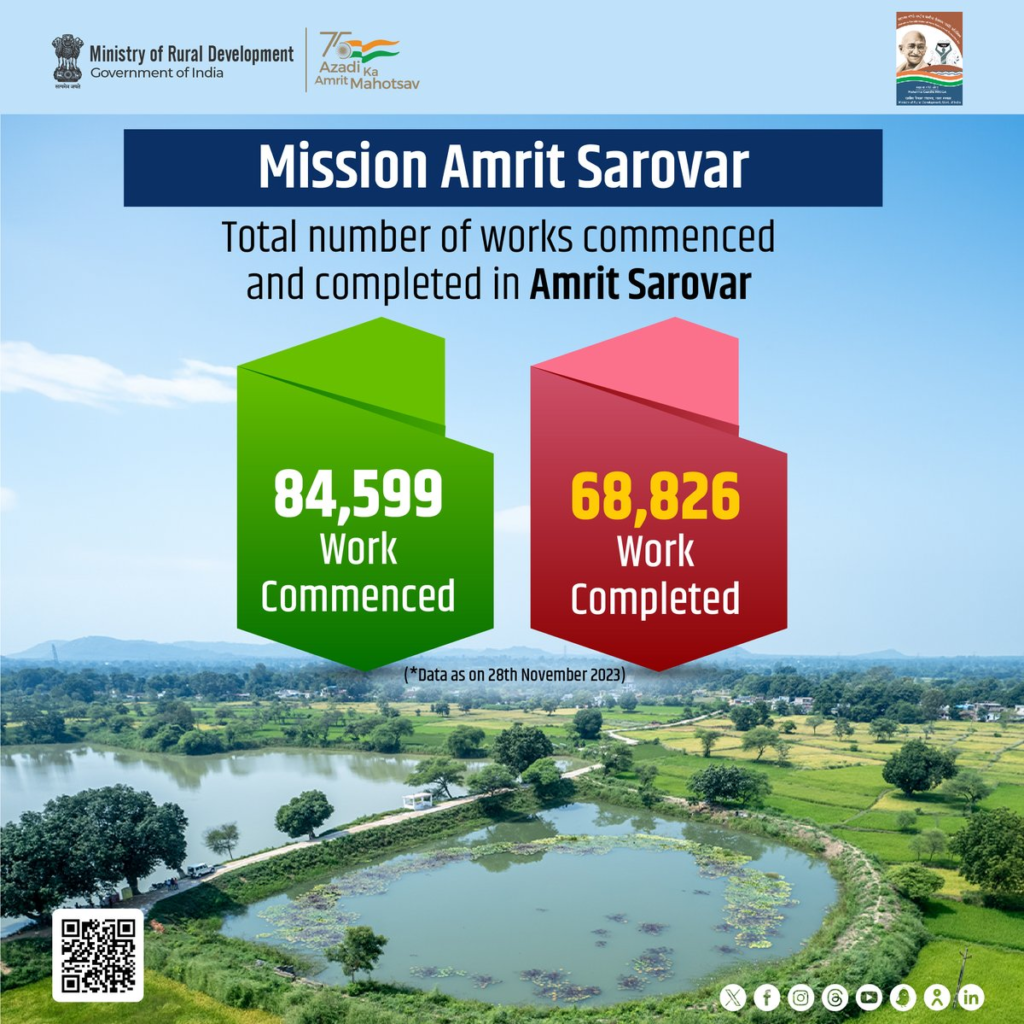
Mission Amrit Sarovar is a nationwide water‑conservation drive launched by the Government of India to create and rejuvenate 75,000 water bodies in 75 districts, symbolizing 75 years of independence. By 2026, the mission has expanded beyond token structures into a network of village ponds, tanks, and reservoirs that directly support irrigation, drinking water, and groundwater recharge. Each site is now treated as a local water asset, not just a political photo op.
What makes Mission Amrit Sarovar 2026 distinctive is its emphasis on local guardians: volunteers, panchayat members, and civil‑society groups who monitor and defend the water bodies once they are built. The local guardians are responsible for ensuring that construction standards are met, encroachments are prevented, and water quality is periodically checked. This local guardians‑centric model marks a shift from a centrally planned project toward a community‑owned water system.
How 75,000 Water Bodies Are Changing Rural India
The 75,000 water bodies under Mission Amrit Sarovar 2026 are not just numbers on a dashboard; they are active water‑security hubs in villages facing erratic rainfall and falling groundwater. In many drought‑prone blocks, these ponds have reduced farmers’ dependence on borewells and expensive tanker water, directly improving irrigation schedules and crop‑cycle reliability. Each water body now functions as a small climate‑resilience node, helping villages buffer against short‑term dry spells.
Beyond agriculture, the 75,000 water bodies also serve as local development hubs. Villagers report that better water availability has led to longer grazing periods, improved livestock health, and more reliable domestic supply. In some panchayats, the water bodies have even become biodiversity pockets, attracting migratory birds and small wetland species. The local guardians are often the first to notice such ecological changes and to alert forestry or wildlife departments if needed.
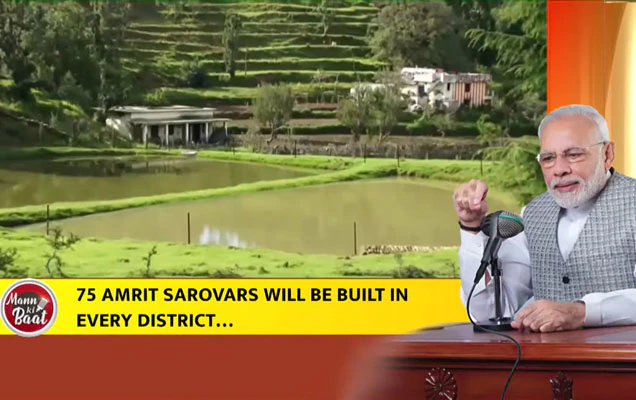
Local NGOs as Guardians of the Waters
A quiet but powerful revolution in Mission Amrit Sarovar 2026 has been the rise of local NGOs as guardians of the newly created and revived water bodies. In Haryana, Rajasthan, Uttar Pradesh, and Bihar, small NGOs with deep roots in specific blocks have taken on the role of third‑eye watchdogs, verifying survey‑to‑ground‑level accuracy and exposing bypassed or “ghost” sites. These local guardians are often young graduates, retired teachers, and social‑work professionals who donate time instead of taking big salaries.
These NGOs also conduct water‑literacy camps, teaching villagers how to read water‑level charts, recognize signs of siltation, and detect early pollution. Their role as local guardians is not adversarial; it is collaborative, bridging gaps between panchayats, contractors, and the district administrations. When a pond starts to smell or turns green, the local guardians are the ones who file complaints, track responses, and sometimes even organize cleanup drives with schoolchildren and youth groups.
The Role of Local Guardians in Monitoring and Accountability
Local guardians are the backbone of Mission Amrit Sarovar 2026’s accountability architecture. They maintain “water diaries” with photographs, dates, and community feedback, which can be shared with higher authorities when works are delayed or poorly executed. In many districts, the local guardians also participate in quarterly review meetings with district project officers, bringing ground‑level data that bypasses sanitized bureaucratic reports.
More importantly, the local guardians act as social pressure points against corruption. When contractors try to cut corners on lining, drainage, or fencing, the local guardians raise alarms through local media, social networks, and even WhatsApp groups linked to panchayats. This guardianship‑based model has significantly reduced ghost ponds and shoddy construction, making the 75,000 water bodies more likely to remain functional over the long term.
Training and Empowerment of Local Guardians
To scale the local guardians model, 2026 has seen a quiet institutional push: several states and union‑level agencies have introduced standard training modules for volunteers and NGO workers. These modules cover basic hydrology, pond‑design principles, water‑quality testing, and complaint‑filing protocols, transforming enthusiastic citizens into system‑aware guardians. The training is often delivered in regional languages and includes visual aids to keep it accessible to non‑technical participants.
Local governments have also started recognizing local guardians formally, issuing identity cards, small honorariums, or transport allowances. Some districts have even created “water‑watch committees” at the panchayat level, where retired teachers, women’s‑self‑help‑group leaders, and youth volunteers rotate as guardians. This formalization strengthens the guardians’ culture so that Mission Amrit Sarovar 2026 does not end when the last cement is poured.
Why the Local Guardians Model Matters Beyond 2026
The local guardians model embedded in Mission Amrit Sarovar 2026 is significant because it offers a replicable blueprint for public infrastructure stewardship in India. Instead of leaving water bodies to decay once the inauguration is over, the local guardians’ vision ensures continuous care and ongoing scrutiny. This is especially critical in a warming country where water scarcity is likely to intensify, not ease, over the coming decades.
In the long run, a strong network of local guardians can also help detect early signs of climate shock—such as unusually rapid drying or extreme siltation—before they become full‑blown crises. The local guardians are not just custodians of 75,000 specific ponds; they are training grounds for a new generation of water‑conscious citizens who view every water body as a shared responsibility. As climate‑adaptation policies expand, the local guardians of Mission Amrit Sarovar 2026 may become the unofficial “first responders” in India’s water‑security story.
-RITOBROTA BANERJEE
MUST READ: Rising Loneliness in 2026: The Paradox of Connection
